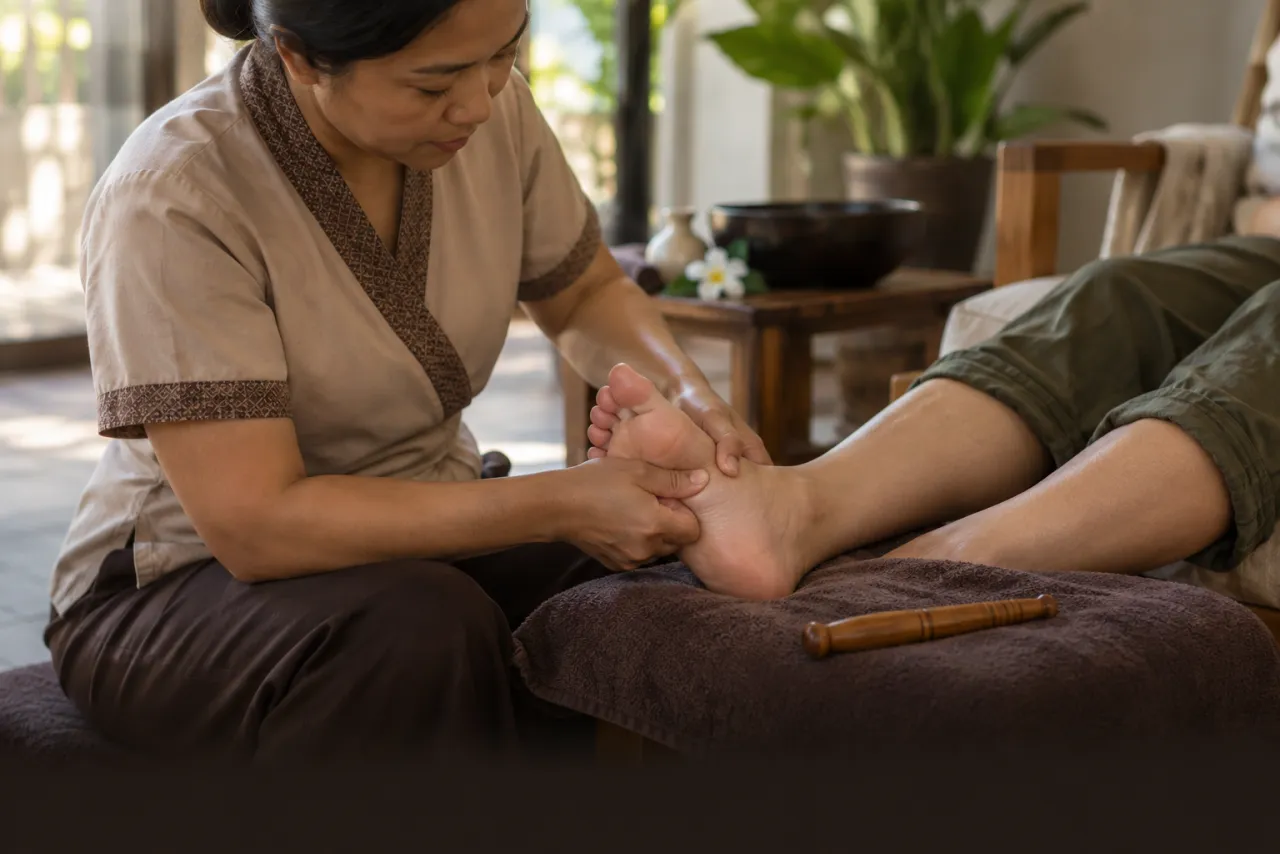
Massage for Insomnia — What It Can Do
How much massage genuinely helps a client who cannot sleep, which kind of sleeplessness responds and which does not, how to adjust pressure and pacing, and the signs that mean referring them to a doctor first.
Short answer
Massage can help a client sleep by relaxing the body and releasing muscle tension before bed, but it does not cure insomnia and you should not say that it does. The clients who benefit most are the ones kept awake by stress and a body that will not switch off. Sleeplessness driven by an underlying physical or mental health condition needs a doctor, and massage is at best a supporting comfort alongside that care.
This article is written for massage therapists and students so they can work safely and recognise the edge of their scope. It is not medical advice, and health massage is not diagnosis or treatment of disease.
"Will this help me sleep?" is one of the questions clients ask most often, and one therapists answer badly most often. Say yes too eagerly and you have promised something the night may not deliver. Say no and you have missed what massage is genuinely good at.
The honest answer is yes for some people, in a narrower way than most clients imagine.
Insomnia is not one problem
Before deciding whether you can help, work out which kind of sleeplessness is in front of you. These three respond to massage very differently.
| What the client describes | Usual driver | How much massage helps |
|---|---|---|
| Lies down and the mind races, body feels wired | Stress and held muscle tension | This is where you help most |
| Falls asleep but wakes with aches | Neck, shoulder, back or leg tension | Helps, if you treat the source of the pain |
| Sleeps but wakes exhausted, snores heavily, heart racing | Something that needs medical assessment | Not yours to work on |
The first group will feel a difference and come back on their own. The third group needs you to be straight with them.
If you are training in Thailand and planning to work abroad, expect the first group constantly — hotel spas see travellers wrecked by time zones, city clinics see office workers who have not switched off in months.
What massage can and cannot do
Here is what you can say without overstating anything:
It can
- Release muscle held tight all day, so the body finds a comfortable sleeping position more easily
- Improve circulation through the areas you work, easing that heavy, tired feeling
- Slow the breathing on its own through steady, repetitive contact — the state a body needs to be in before sleep arrives
- Give the client an hour with no phone and nobody asking anything of them, which for plenty of people is the most valuable part
It cannot
- Address a cause rooted in a physical or mental health condition
- Replace a consistent sleep schedule and sensible habits before bed
- Guarantee a good night, because sleep depends on far more than muscle tension
If a client expects one session to fix months of broken sleep, reset that expectation before you start rather than taking the money and hoping.
What makes a session actually help sleep
The techniques are not exotic. The rhythm and the environment are what change.
Keep the rhythm steady and predictable
Frequent changes of pressure or position keep the body on alert, waiting for the next surprise. Repetition the nervous system can predict is what lets someone let go.
Use less pressure than you normally would
This client is not here for deep work on a chronic injury, and pressure that tips into pain switches the body back on.
Breathing is your gauge. Slower and deeper means you are on track. Breath-holding or bracing means you have gone too hard.
Spend time on the parts people skip
In practice the head, neck, base of the skull and soles of the feet settle this client faster than pouring the whole hour into the back. Many also arrive with the neck and shoulder pattern that comes from desk work, and the two can be treated together.
Keep the room consistent for the whole hour
Lights brought up halfway through, conversation at reception, or music that suddenly changes tempo can undo an hour of work in three seconds.
Finish with something they can do themselves
A gentle neck and shoulder stretch before bed, or half an hour away from screens. It costs them nothing, and it is why they will remember you as someone who was not just selling the next package.
Things to be careful about
- Clients who wake disoriented — let them sit for a minute before standing, rather than getting straight off the table
- Clients taking sleep medication — not a contraindication, but ask whether they have taken it today, as they may be drowsy and unsteady afterwards
- Older clients often wake at night for several overlapping reasons; there is more in massage for elderly clients
- Never advise on medication — starting, stopping or changing a dose is for their doctor or pharmacist, not you
Signs to refer before you work
- Weeks of sleeplessness bad enough to affect their job or their driving
- Loud snoring broken by pauses in breathing, with a headache most mornings
- A racing heart, night sweats, or rapid unexplained weight change
- Low mood, loss of motivation or tearfulness alongside the worsening sleep
- Sleep that collapsed immediately after starting a new medication
Tell them plainly that massage can make them more comfortable, but symptoms like these deserve a doctor's attention. Most people trust a therapist who says that more than one who promises everything.
Why these clients are good for your working life
Looked at as a career question, sleep-focused clients have real advantages.
- They book late afternoon and early evening, often a quieter slot than the peak hours everyone competes for
- They come back regularly, because stress returns every week
- The work is physically light, which matters if you intend to do this for decades — the same calculation behind the joint and thumb problems that end careers early
- They are easy to communicate with, since they are not arriving with pain they expect gone by the end of the hour
The downside is worth admitting: you cannot measure the result. A client with back pain tells you immediately whether it helped. A client with sleep problems only finds out that night, and you learn nothing unless they come back and say so. For therapists working the evening and late shifts these clients are often the bulk of the book.
Learn to read bodies, not memorise routines
This work is not technically difficult. The difficulty is reading the person in front of you — what they are holding, how much pressure they can take, and when to say this is not something massage fixes.
At Michael Thai Massage School anatomy is taught alongside technique, because Dr. Michael came to this from a veterinary background and explains muscle and nervous system in a way that holds up at the table rather than only in a classroom.
The tension-release and symptom-reading work sits in the 150-hour Thai massage course, and the oil-based relaxation side in the spa-focused training on the courses page. Unsure which suits the work you want? Get in touch and we will tell you honestly.
In short
- Sort the client first — stress and tension, pain waking them, or something medical
- Massage helps the body settle and makes sleep easier to reach. It is not a treatment
- Steady rhythm, moderate to light pressure, and judge it by their breathing
- Late afternoon and early evening beat morning for this purpose
- Snoring with breathing pauses, palpitations, rapid weight change or low mood all mean refer first
Frequently asked questions
Does massage actually cure insomnia?
What time of day works best for a sleep-focused session?
Should the pressure be firm or light?
Clients keep falling asleep on my table. Should I wake them?
When should I send a client to a doctor before working on them?
Related courses
- Thai Massage for Health — 150 HoursTuition 4,900 THB
- Aromatherapy Oil Massage for Health — 150 HoursTuition 4,900 THB
Related searches
Serious about starting? Talk to us first.
Free LINE consultation